

Table Of Contents
Cod Liver Oil Has Naturally Occurring Vitamin E!
Dr. Subramaniam Sathivel answers all of these questions in the following article. Are you short on time? Clicking on each question provides a shortcut to the answer!
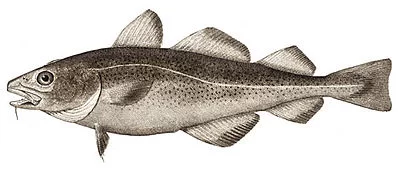
Vitamin E in Cod Liver Oil
By Dr. Subramaniam Sathivel
How does vitamin E end up in fish?
Vitamin E, an antioxidant nutrient, is synthesized (made) in plants and algae (Whistance and Threlfall, 1970). It is also found in fish and marine animals, but fish do not themselves synthesize vitamin E. This raises an interesting question: How does vitamin E come to be found in fish? Simply put, fish assimilate vitamin E from their diet.
How does vitamin E travel through the marine food chain?
The cycle begins with small organisms called zooplankton that consume phytoplankton (microalgae, which can produce vitamin E); the zooplankton then are consumed by small fish, which are eaten by larger fish, and so on.
There are a number of small fishes that eat macroalgae, often called “algae eaters.” These small algae eaters are an integral part of a cod’s food chain. In Alaskan coastal areas, commonly found macroalgae include Phaeophyta (brown algae) species (Fucus distichus, Saccharina latissima, Saccharina groenlandica, and Alaria marginata); Rhodophyta (red algae) species (Porphyra fallax); and Chlorophyta (green algae) species (Ulva lactuca) (Kellogg et al., 2014).
There is another pertinent question related to vitamin E: Do particular species of fish contain a significant amount of vitamin E, and if so, where is that vitamin E stored in the fish? As it happens, coldwater fish such as cod tend to contain more vitamin E than warm water fish. Because vitamin E is fat-soluble, for the most part it is dissolved in the lipids (fat and oils) stored in the liver, which means that when the oil is extracted from the cod liver, vitamin E gets extracted along with the oil. (However, the final concentration of vitamin E in the oil depends on the extraction methods and conditions and on a number of other factors.
What are the different forms of vitamin E found in the food chain?
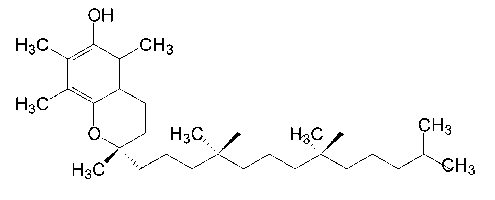
Vitamin E is considered an antioxidant because it is able to reduce or prevent lipid oxidation. Plants, algae, and cyanobacteria produce vitamin E in the form of Α-, Β-, Γ-, and Δ-tocopherols and Α-, Β-, Γ-, and Δ-tocotrienols. The Α-form of vitamin E has the greatest antioxidant activity among the tocopherols and tocotrienols, and Α-tocopherol is the principal tocopherol found in marine animals (Syväoja et al., 1985).
Which form of vitamin E is most often found in fish?
As already noted, cod fish and other fish cannot synthesize tocopherols directly, but as ocean predators that eat smaller fish (including algae eaters), cod fish are able to assimilate vitamin E and other health-beneficial bioactive compounds such as pigments and polyphenols. Factors such as season, food, size, and age can influence the concentration of tocopherols (Ackman and Cormier, 1967; López et al., 1995), but in general, cod liver oil contains 0.26-0.32 mg Α-tocopherol per gram of lipid (O´Keefe and Ackman, 1986).
What is marine-derived tocopherol, and why is it important?
Recently, researchers detected in cold-acclimated fish a new marine-derived tocopherol (MDT) that may be capable of providing additional antioxidant and health benefits (Yamamoto et al., 2001). Coldwater Pacific chum salmon (Oncorhynchus keta) and its eggs, sockeye salmon (Oncorhynchus nerka), and Alaska pollock (Gadus chalcogrammus) contain relatively high concentrations of MDT. MDT (like vitamin E) originates from the fish’s diet (Yamamoto et al., 1999). Thus, MDT in the tissues of wild masu salmon (Oncorhynchus masou) is reportedly higher than that found in the tissues of aqua-cultured masu salmon.
Pacific cod (Gadus macrocephalus) is a coldwater fish in which concentrations of 3.1 nmole of MDT per gram of wet muscle tissue have been noted. Although this is a low concentration, it may be sufficient to impart health benefits when consumed. There is little information available on the MDT concentration in cod liver oil. However, because higher concentrations of lipid are stored in a cod’s liver than in its muscle, there is a good possibility that MDT is present in greater concentrations in the oil than the lower levels noted in the flesh. Through adherence to minimal processing techniques to extract cod liver oil, one would expect the extracted oil to contain an abundance of these natural bioactive compounds.
References
Ackman, R. G., & Cormier, M. G. (1967). α-Tocopherol in some Atlantic fish and shellfish with particular reference to live-holding without food. Journal of the Fisheries Board of Canada, 24(2), 357-373.
Kellogg, J., Grace, M. H., & Lila, M. A. (2014). Phlorotannins from Alaskan seaweed inhibit carbolytic enzyme activity. Marine drugs, 12(10), 5277-5294.
López-Gálvez, D., de la Hoz, L., & Ordoñez, J. A. (1995). Effect of carbon dioxide and oxygen enriched atmospheres on microbiological and chemical changes in refrigerated tuna (Thunnus alalunga) steaks. Journal of Agricultural and Food Chemistry, 43(2), 483-490.
O’Keefe, S. F., & Ackman, R. G. (1987). Vitamins A, D3 and E in Nova Scotian cod liver oils.
Syväoja, E. L., Salminen, K., Piironen, V., Varo, P., Kerojoki, O., & Koivistoinen, P. (1985). Tocopherols and tocotrienols in Finnish foods: Fish and fish products. Journal of the American Oil Chemists’ Society, 62(8), 1245-1248.
Whistance, G. R., & Threlfall, D. R. (1970). Biosynthesis of phytoquinones. Homogentisic acid: a precursor of plastoquinones, tocopherols and α-tocopherolquinone in higher plants, green algae and blue–green algae. Biochemical Journal, 117(3), 593-600.
Yamamoto, Y., Fujisawa, A., Hara, A., & Dunlap, W. C. (2001). An unusual vitamin E constituent (α-tocomonoenol) provides enhanced antioxidant protection in marine organisms adapted to cold-water environments. Proceedings of the National Academy of Sciences, 98(23), 13144-13148.
Yamamoto, Y., Maita, N., Fujisawa, A., Takashima, J., Ishii, Y., & Dunlap, W. C. (1999). A New Vitamin E (α-tocomonoenol) from Eggs of the Pacific Salmon Oncorhynchus keta. Journal of natural products, 62(12), 1685-1687.

About the Author
Subramaniam Sathivel, Ph.D. Professor of Food Processing Engineering
Dr. Sathivel is the Professor of Food Engineer at the School Nutrition and Food Sciences and the Department of Biological and Agricultural Engineering, Louisiana State University Agricultural Center (LSUAC). Before joined LSUAC, Dr. Sathivel worked five years as an Assistant Professor of Seafood Processing and Engineering at the Fishery Industry Technology Center (FITC), University of Alaska Fairbanks, Alaska. He is responsible for the food process engineering laboratory at the LSUAC, where his projects include design and development of an adsorption technology to purify fish oils and fish protein, value added products, edible films and edible coatings. Dr. Sathivel has published 60 refereed articles, two popular articles, five book chapters, and six proceedings. Dr. Sathivel has an equally respectable record of published abstracts and professional presentations, many of which were invited talks at international scientific meetings and conferences.